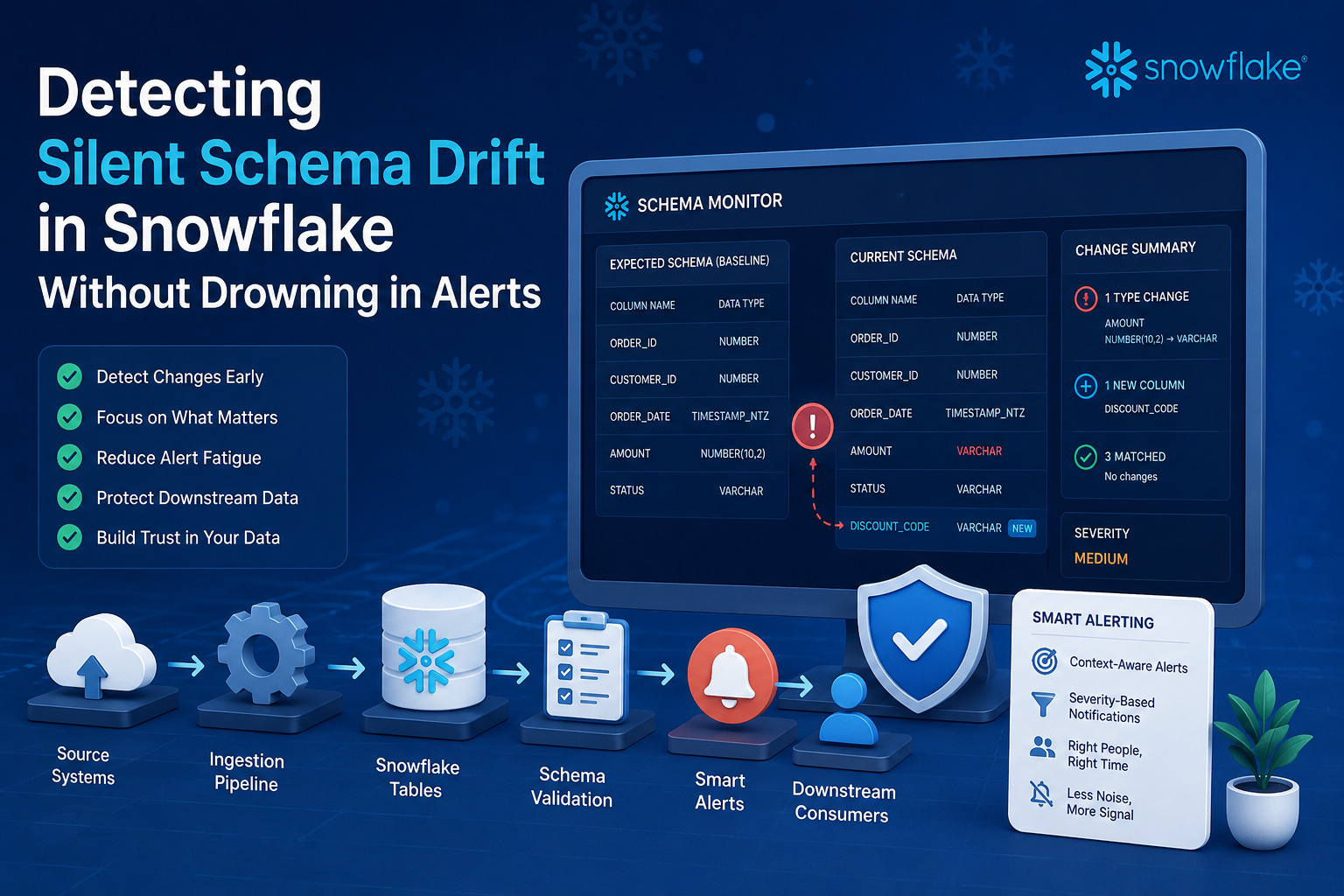
Detecting Silent Schema Drift in Snowflake Without Drowning in Alerts
Modern Snowflake environments evolve rapidly as analytics teams continuously modify tables, pipelines, and transformation logic. While these changes improve flexibility, they can also introduce silent schema drift that breaks downstream reporting and data workflows without immediate visibility.
Why Schema Drift Becomes a Serious Problem
Schema drift occurs when table structures unexpectedly change over time. New columns may appear, data types can shift, or critical fields might disappear entirely from upstream systems.
Without proper monitoring, these issues often remain unnoticed until dashboards fail or business metrics become unreliable.
Common Causes of Silent Schema Drift
- Upstream application updates
- ETL pipeline modifications
- Manual table changes
- Vendor API structure updates
- Inconsistent ingestion workflows
These changes can silently propagate across analytics systems and impact downstream consumers.
Building Smarter Drift Detection
Modern data teams should avoid noisy alert systems that generate excessive notifications for every minor schema update.
Instead, teams should focus on:
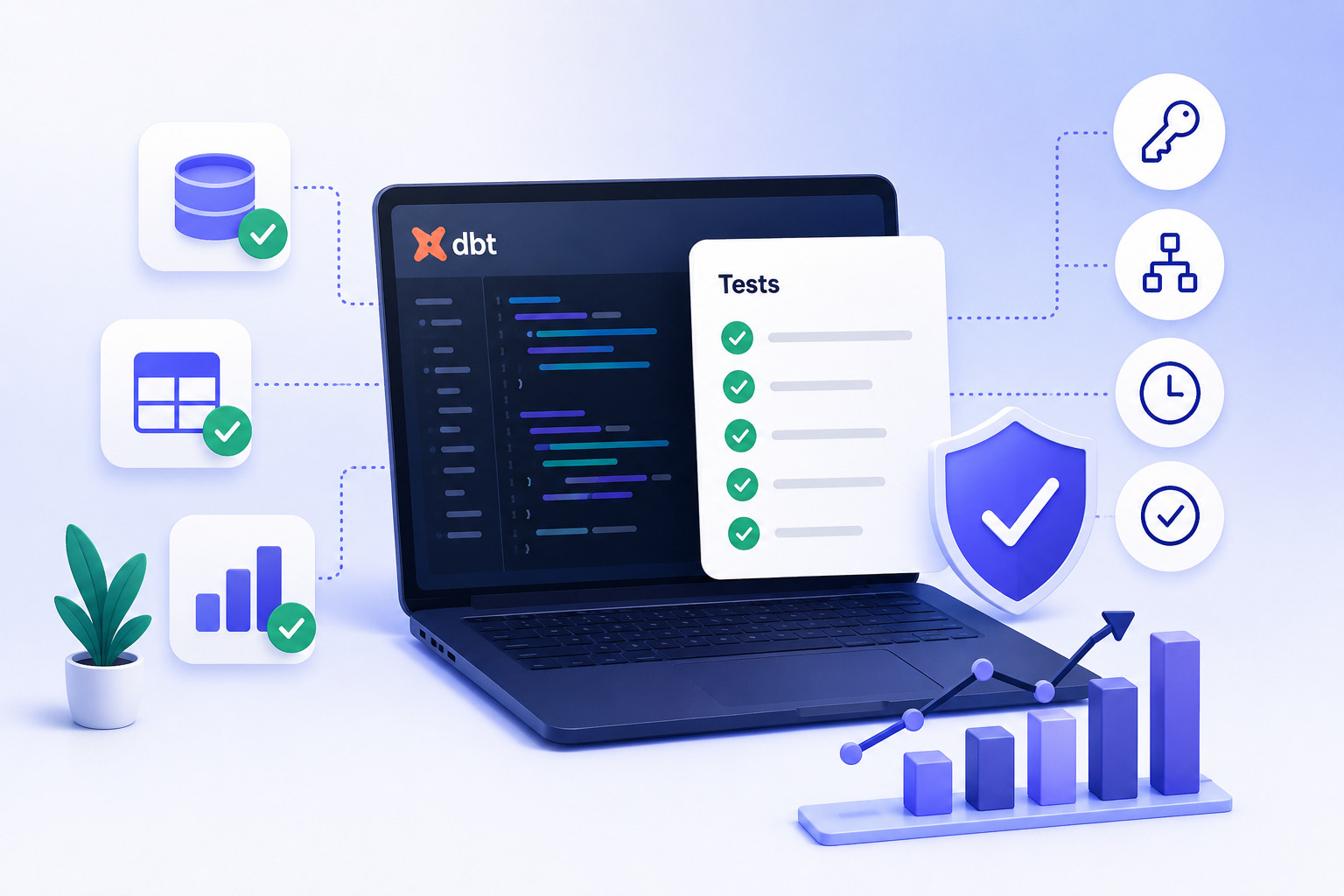
- Critical column monitoring
- Data type validation
- Change severity classification
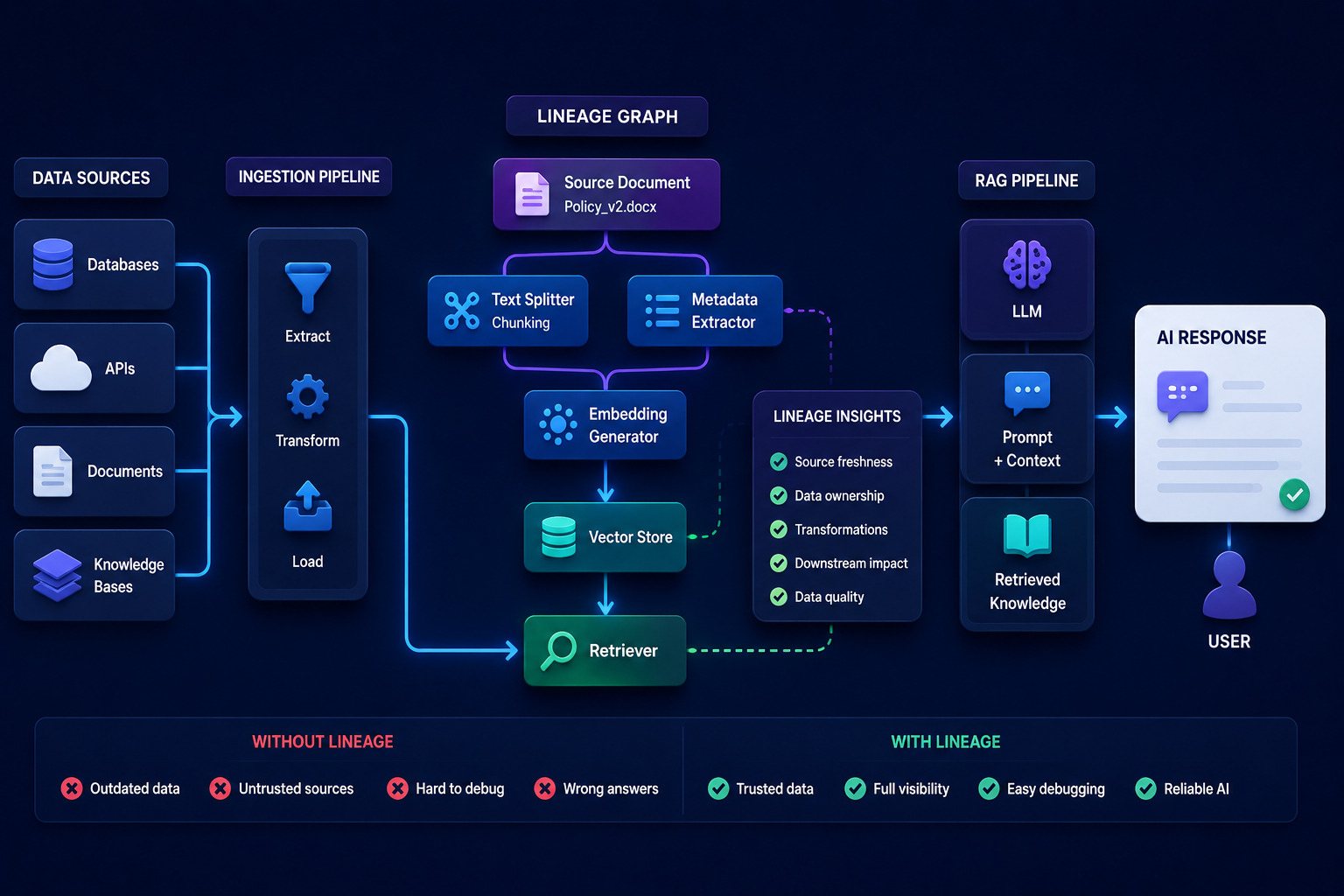
- Lineage-aware alerting
- Historical schema tracking
This approach reduces alert fatigue while improving operational visibility.
Example Use Case
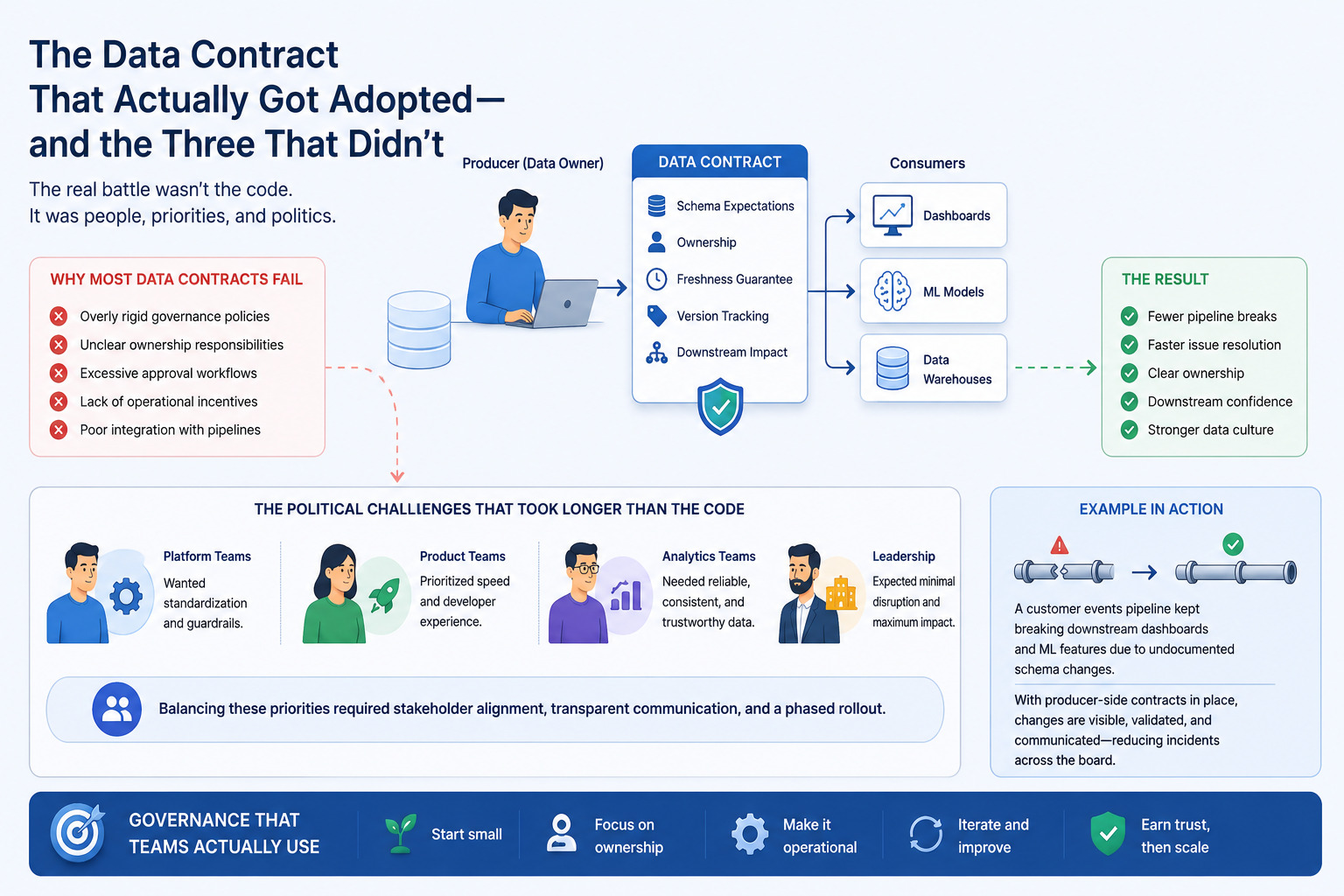
For example, if a payment pipeline suddenly changes a transaction amount field from integer to string format, downstream financial dashboards may silently display inaccurate calculations.
Automated schema validation can detect these changes immediately before they affect business reporting.
Building Reliable Snowflake Observability
Effective schema drift detection helps analytics engineering teams maintain trust in production data systems without overwhelming engineers with unnecessary alerts.
Strong observability practices improve reliability, reduce incident response time, and create more resilient analytics infrastructure.