The Data Contract that Actually Got Adopted — and the Three That Didn’t
Rolling out producer-side data contracts sounds straightforward in theory. In practice, most governance initiatives fail long before the technical implementation becomes the problem.
At a 600-person company, the biggest challenges were not schemas, APIs, or validation tooling — they were ownership alignment, operational accountability, and cross-team adoption.
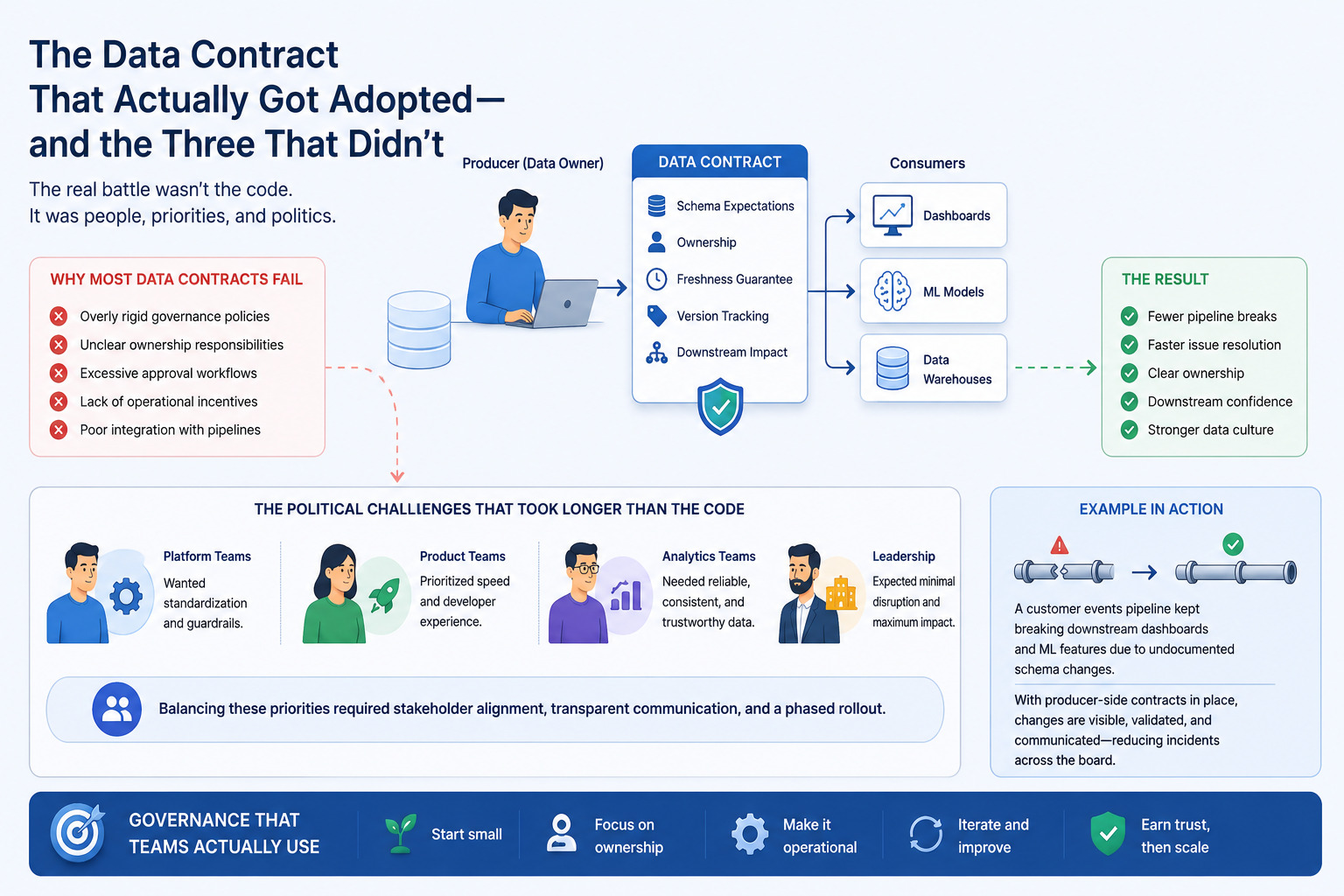
Why Most Data Contracts Fail
Many organizations introduce data contracts with good intentions but quickly encounter resistance from engineering and product teams.
Common problems include:
- Overly rigid governance policies
- Unclear ownership responsibilities
- Excessive approval workflows
- Lack of operational incentives
- Poor integration with existing pipelines
As a result, teams often bypass the process entirely.
The Contract Model That Actually Worked
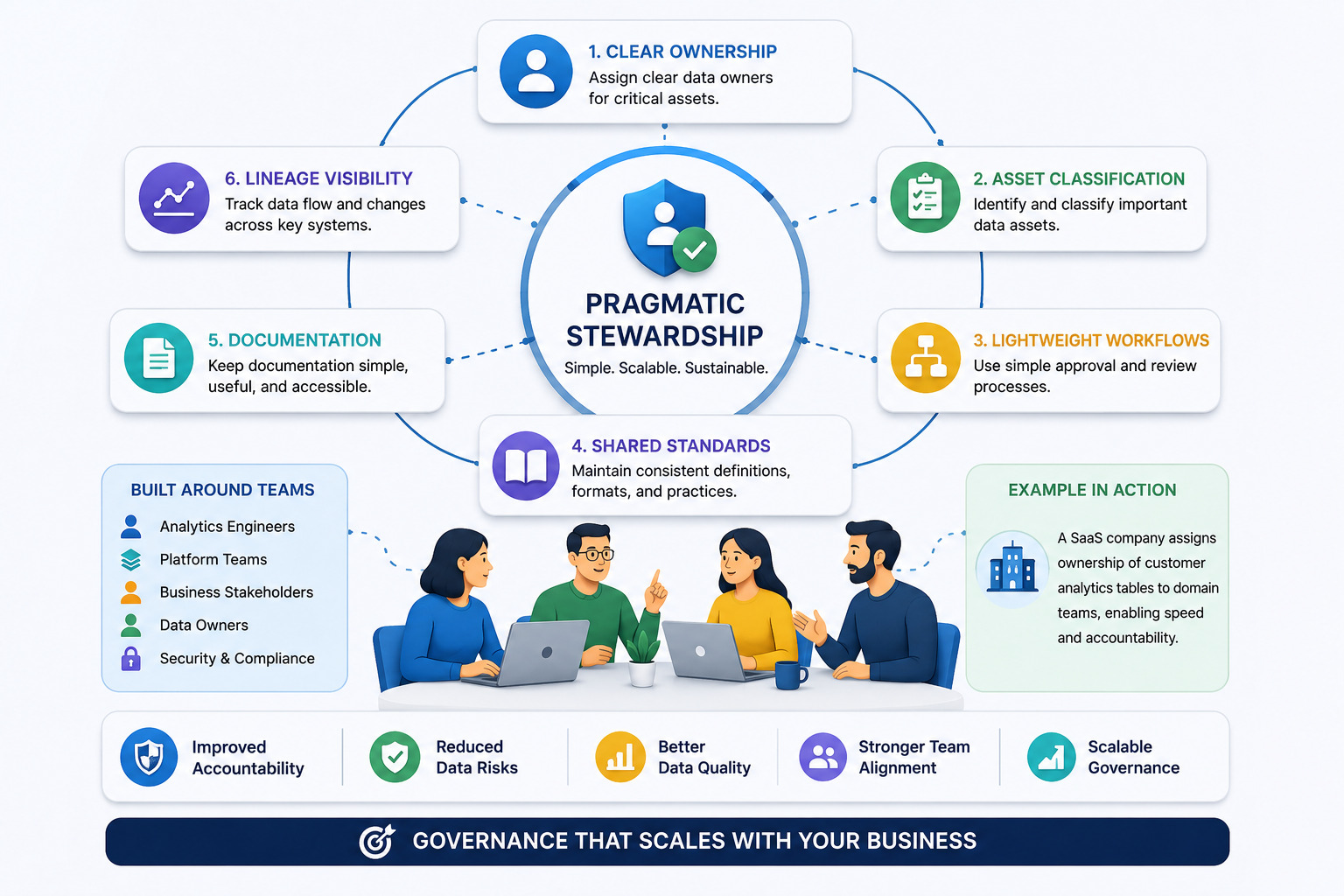
Instead of enforcing complex enterprise governance structures, successful adoption came from focusing on lightweight operational standards.
The most effective producer-side contracts included:
- Clear schema expectations
- Ownership visibility
- Basic freshness guarantees
- Version tracking
- Downstream impact awareness
This reduced friction while improving accountability across teams.
The Political Challenges Behind Adoption
The technical implementation took only a few weeks. Aligning teams around ownership and accountability took significantly longer.
Different teams had conflicting priorities:
- Platform teams wanted standardization
- Product teams prioritized speed
- Analytics teams needed reliability
- Leadership expected minimal operational disruption
Balancing these interests required gradual rollout strategies and strong stakeholder communication.
Example Use Case
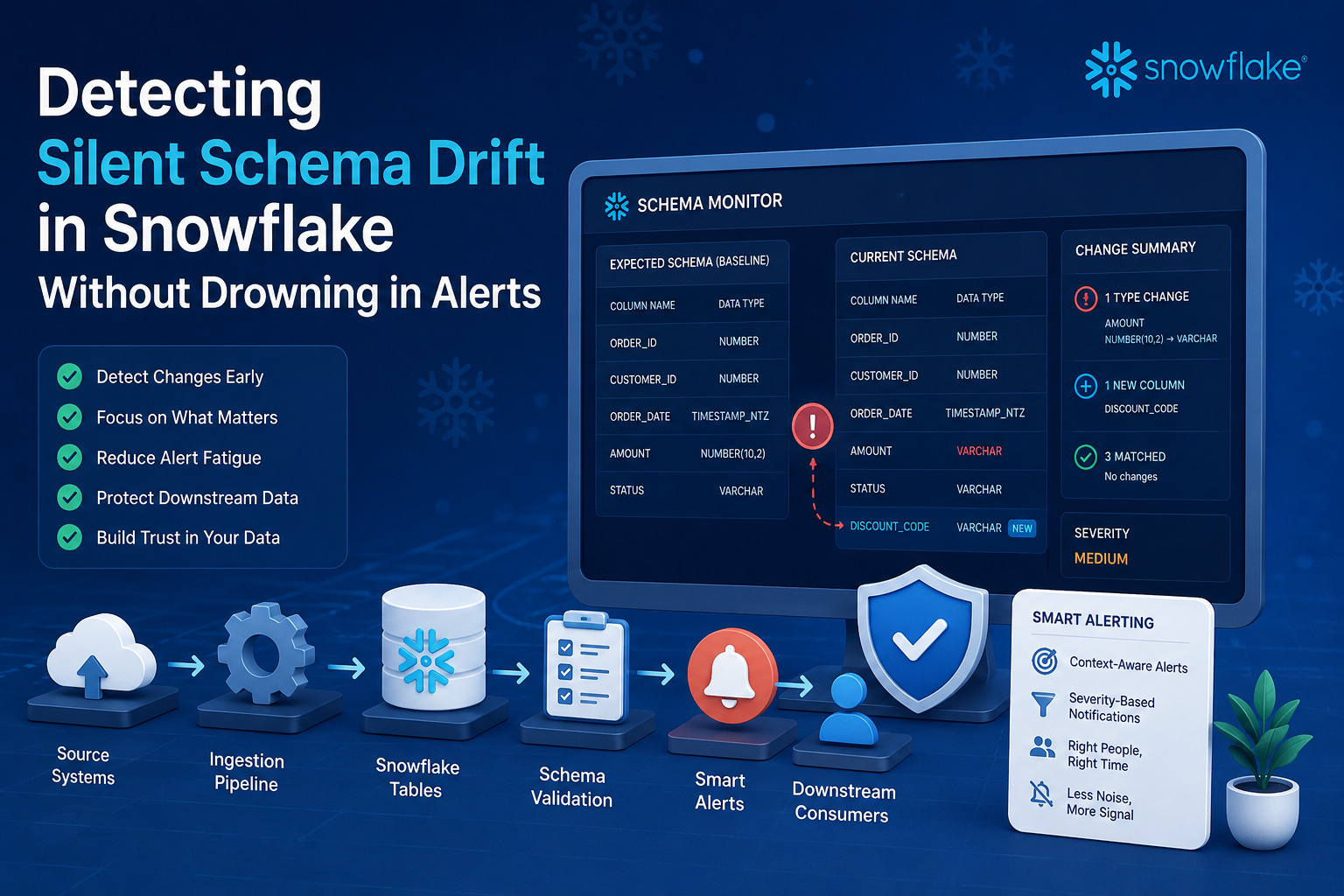
For example, one customer events pipeline repeatedly introduced undocumented schema changes that broke downstream dashboards and machine learning features.
After implementing lightweight producer-side contracts with ownership visibility and change notifications, incident frequency dropped significantly across dependent systems.
Building Governance That Teams Actually Use
Successful governance models prioritize adoption over theoretical perfection.
Organizations that focus on operational simplicity, incremental rollout strategies, and clear ownership models build stronger long-term governance foundations without slowing down engineering velocity.